
The Coffee Link
Sometime in the late 1990s, I was a teenager downloading freeware from the internet. Winamp, small utilities, screen savers that did something clever. Software built by developers who needed the thing themselves and figured someone else might too.
Occasionally you’d open the About section and find a coffee link. PayPal, usually, with a polite note: if this was useful, feel free. I always wondered who actually clicked it.
That era had a particular quality. The internet was full of things people had made because they wanted them. Not because a product team had validated the market opportunity. Someone needed a thing, built the thing, and shared it. The coffee link was almost apologetic, a quiet acknowledgement that they’d spent time on something, offered in case that time had been worth something to you too.
I didn’t click many of those links (teenager, no money, dial-up connection) but I thought about the people who did. And somewhere in that unformed teenage way, I thought: one day I’ll make something and put a coffee link in it.
Twenty-odd years later, I built an app.
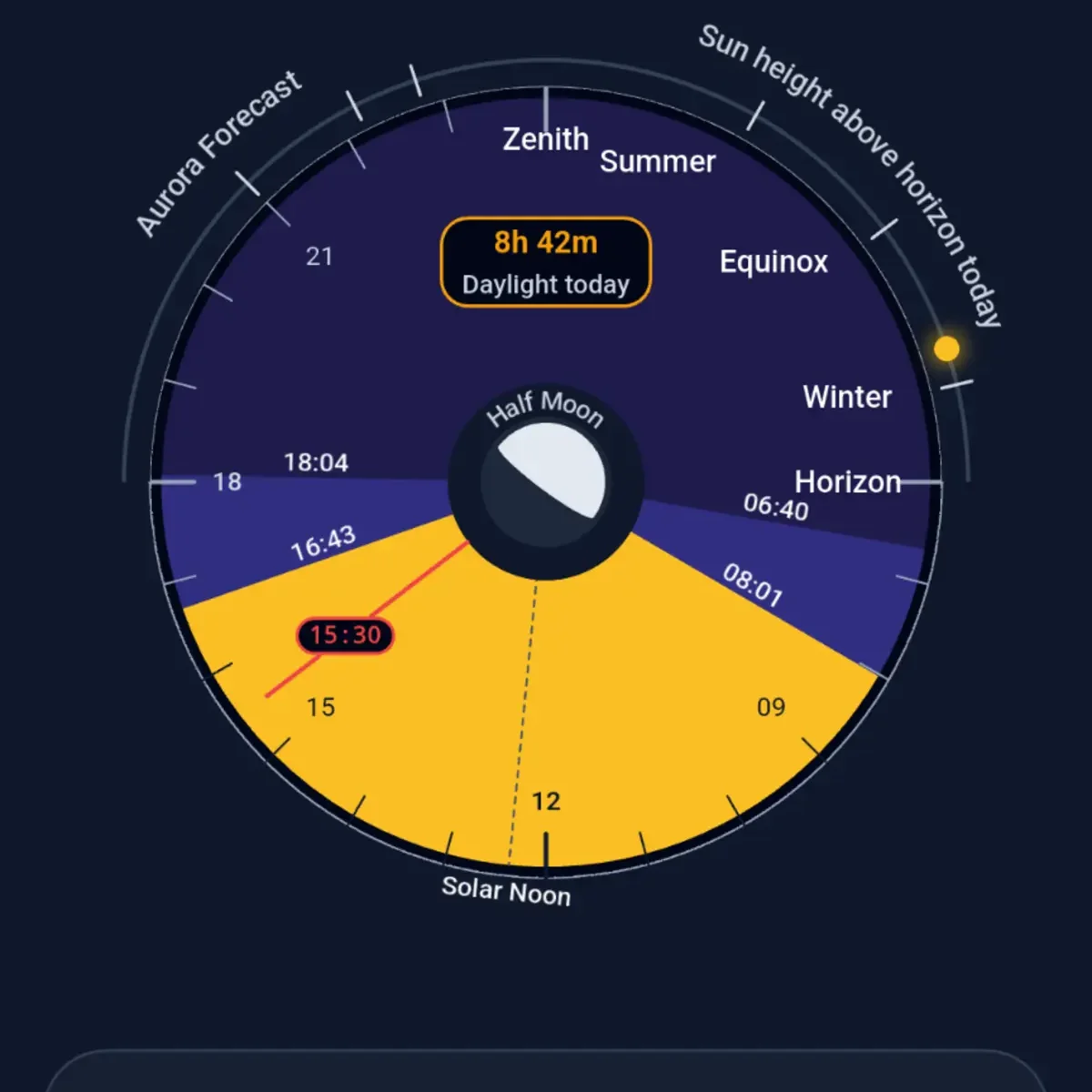
It’s called Sunlight, and it’s available on iOS and Android. The idea is simple: during the darker months, it tells you how much sunlight you’re gaining each day compared to the winter solstice. Not how much daylight you have, but how much you’re gaining. The direction of travel. A small daily proof that it’s getting better, even when it doesn’t feel like it.
I built it with AI assistance, which means I could go from “I want this to exist” to “this exists in the App Store” in a fraction of the time it would have taken that freeware developer back in 1998. No mobile development background required. Just the idea, the intention, and enough persistence to work through the problems (which is underselling my product development and design skills tbh).
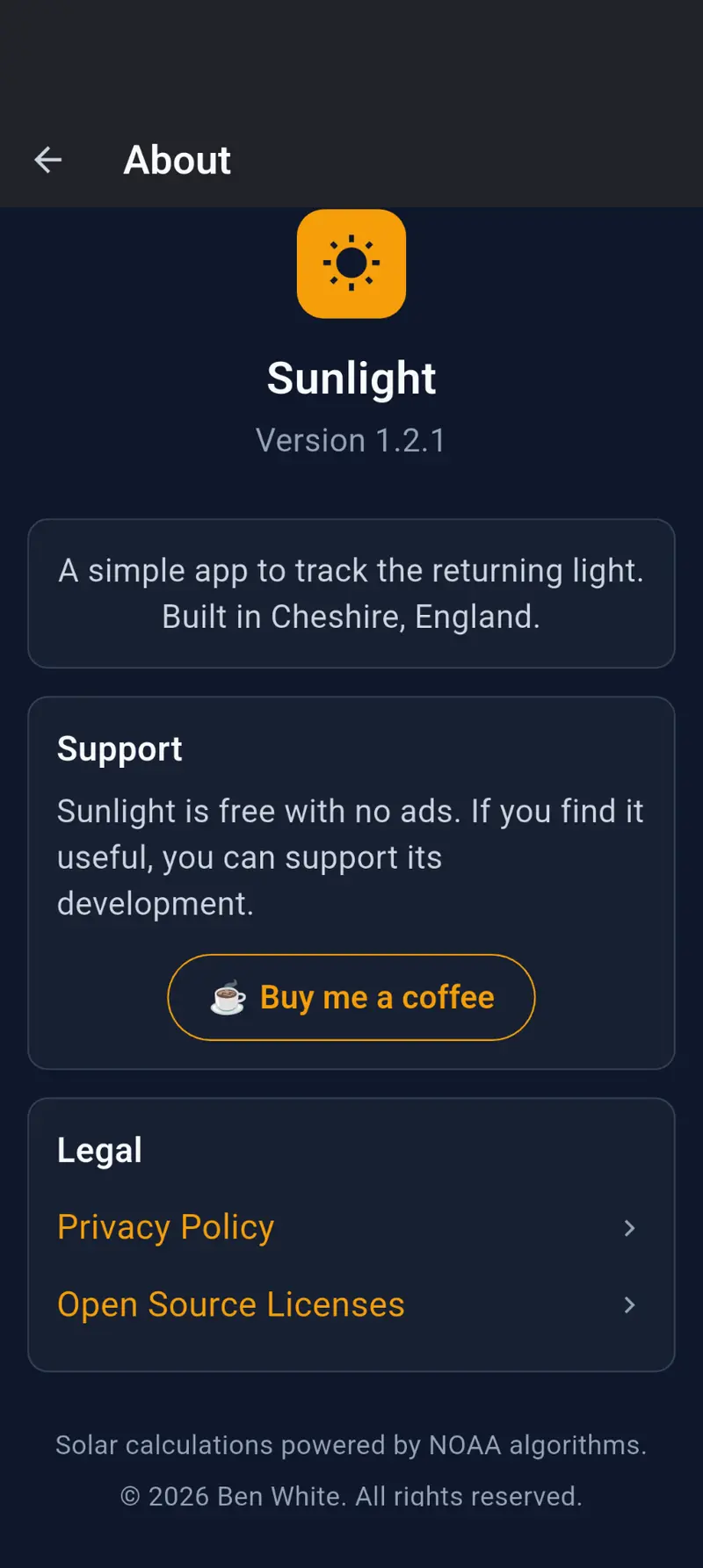
It’s free, and in the About section, there’s a coffee link.
I’ve been thinking about who might find it. Specifically, I’ve been thinking about whether some kid, teenager, early twenties, downloading something they needed, might open the About section, land on that link, and feel something.
They’ll probably scoff. The hustle gospel runs deep now, and a free app with a polite coffee link can read as a failure of ambition rather than a quiet act of generosity. No dark patterns, no growth hacking, no “upgrade to Premium for the full sunrise experience.” In 2026, that’s almost countercultural. They’ll move on quickly.
But the other one, the one who sits with it for a moment, that kid is going to feel something they can’t quite name. A small proof that someone built a thing they wanted, shared it for nothing, and left a polite door open just in case.
There’s a generational inversion here. I was the kid who wondered about the coffee link. Now I’m the “developer” who put one there. The loop closed, except I made my app with AI assistance in a fraction of the time it would have taken that original developer. The technology changed completely. The intention didn’t.
The kid who dreams will probably build something too. Whether they use whatever comes after Claude is almost beside the point. The important thing is they saw that the barrier between “person who has an idea” and “person whose idea exists in the world” is smaller than it looks.
That’s worth more than the coffee.
Related reading: Sunlight: One Design System, Many Surfaces is a technical look at the design tokens behind the app. I Built My Family a Chief of Staff. It Runs on a Raspberry Pi. is another thing built because I wanted it, not because a product team validated it. It Started with a Muddy Stick is the Peekabout build journal — another project that began because I wanted it, then turned out to be useful to other people too. The Gutenberg Parallel looks at what happens when the barrier between an idea and a thing collapses. Card Stash is one of those built-because-I-wanted-it things, a privacy-first loyalty card wallet with no network calls at all.