
Ideas Were Never the Bottleneck
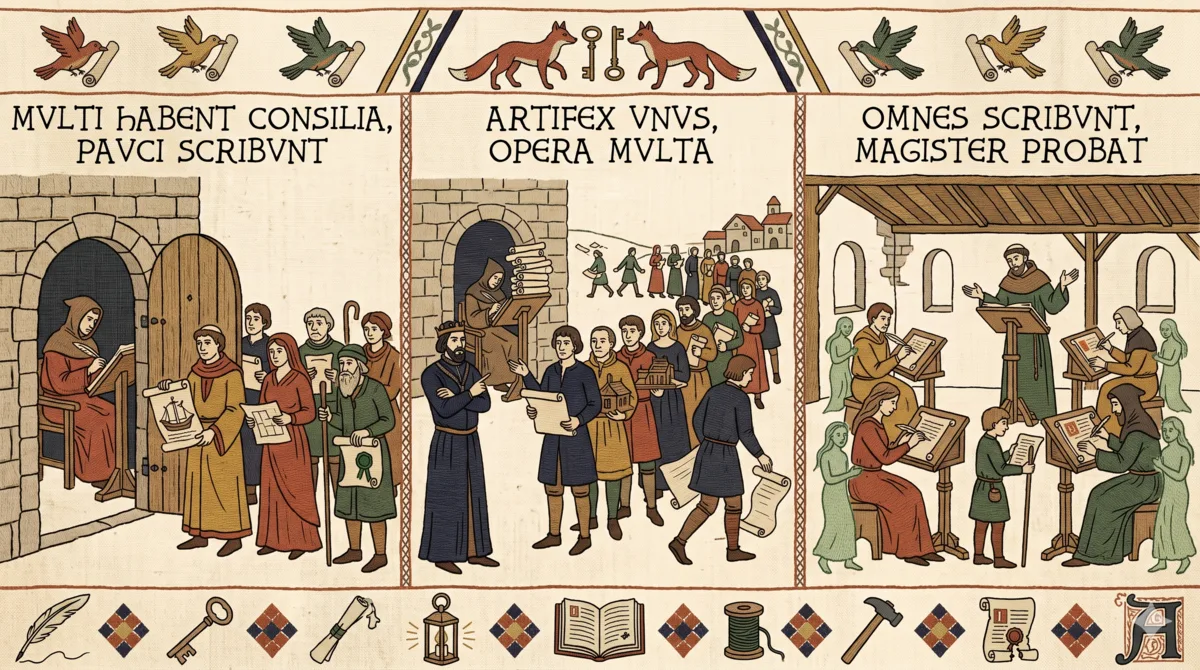
For thirty years, “who can build this?” meant “who can write the code?” That equation has quietly come undone, and most organisations are still hiring, structuring teams, and prioritising ideas as if it hadn’t.
That gate self-selected for a particular training pathway, with the gender, class, and work-preference patterns that have been stereotyped ever since. Plenty of people had ideas, but few had a route from idea to working prototype that did not run through someone else’s calendar.
Of the leading AI app builders, the majority of users have never written code professionally. A quarter of Y Combinator’s most recent startup cohort shipped codebases that were almost entirely AI-generated.
The barrier between intent and prototype is now mostly articulation.
The bottleneck has moved
Before
Who can write the code, or commission someone who can.
Now
Who can articulate the intent clearly enough for the model to build it.
The friction was never the idea
A friend posted recently about his nine-year-old son, who is on the autism spectrum and wrote a book over the summer. The story had been in his head for years; the barrier was the pencil, and the focus required to manipulate one. Voice-to-text and image-generation tools did not write the book, they removed the friction between his ideas and their expression.
The same dynamic is now at work for adults. EY’s study of 316 neurodivergent and disabled employees across 17 organisations found that 91 percent view these tools as valuable assistive technology, and 85 percent believe they support a more inclusive workplace. EY’s six-week innovation sprint with neurodivergent team members generated 60 to 80 process improvement suggestions.
When articulation friction drops, ideas that have been sitting in people’s heads finally surface.
The evidence
of Y Combinator's last cohort shipped codebases that were almost entirely AI-generated
Y Combinator W25 cohort analysis
of neurodivergent and disabled employees view these tools as valuable assistive technology
EY / Microsoft, 316 employees, 2024
What this looks like in practice
The Commercial Director sitting on three direct-to-consumer hypotheses she cannot get prioritised in the development queue can now stand up a working prototype of each in an afternoon. Whether her instincts are right is a separate question. The prior bottleneck, whether she could test her instincts at all without negotiating for engineering capacity, has gone.
Three shifts in the innovation pipeline
The implications are pipeline-shaped, not tool-shaped.
People previously routed around can now contribute directly. The colleagues whose strengths sat in synthesis and domain depth, rather than in technical translation, can now build prototypes themselves rather than waiting to commission one. The skills that have always driven innovation are customer empathy and synthesis. The gate was technical execution, and the gate is gone.
Existing technical specialists become more valuable, not less. Someone has to make the prototypes that survive scrutiny work in production, which is a different problem from making them work in a demo. Expect platform engineers and architects to absorb more responsibility as the build-something-quickly bar drops.
Articulation friction drops outside prototyping, too. The colleagues whose workplace communication style was hardest to read often turn out to have ideas they could not easily surface. EY’s findings suggest that the same tools lowering the prototyping barrier also lower the everyday articulation barrier for many contributors. Both gates open at once.
Three shifts in the innovation pipeline
Synthesisers contribute directly. Colleagues whose strength is customer empathy or domain depth can now build prototypes themselves rather than waiting to commission one.
Technical specialists become more valuable. Production-grade quality is the new bottleneck. Architectural judgement matters more, not less.
Articulation friction drops everywhere. The same tools that lower prototyping friction lower the daily articulation barrier for many contributors.
The craft of widening the pipeline
The craft here is in noticing whose ideas have been bottlenecked, by what, and whether the bottleneck still applies. And then asking whether the hiring approach, the team structure, and the working norms are still calibrated for the previous bottleneck.
That is the more valuable question, and the harder one. The tools will not answer it for you, and your competitors are mostly looking at the productivity dashboards instead.
Thinking about the people in your organisation who already had the ideas, what was actually stopping them from building?
Sources
- EY / Microsoft, December 2024. Study of Microsoft 365 Copilot use among 316 employees with disability and/or neurodivergence across 17 organisations.
- State of Vibe Coding 2026, Taskade and Hostinger industry analyses (vendor-published, treated as directional).
- Y Combinator Winter 2025 cohort: codebase generation analysis published February 2026.
Related reading: The Gutenberg Parallel traces the same gatekeeper-disruption pattern through five centuries of printing history. The Disposable Masterpiece is the companion discipline: the artefact has a shelf life, but the problem-space understanding compounds. More Work, Fewer Doors examines the other side of the pipeline shift, where the junior rungs that train future seniors quietly disappear. The Creativity Paradox traces the same Jevons mechanism through creative work and what cheaper production does to demand. How to Hire for AI Transformation Success is the practical companion: once the gate moves, who do you actually hire? Building Your Future in the Age of AI is guidance for the young professionals entering that reshaped pipeline.